


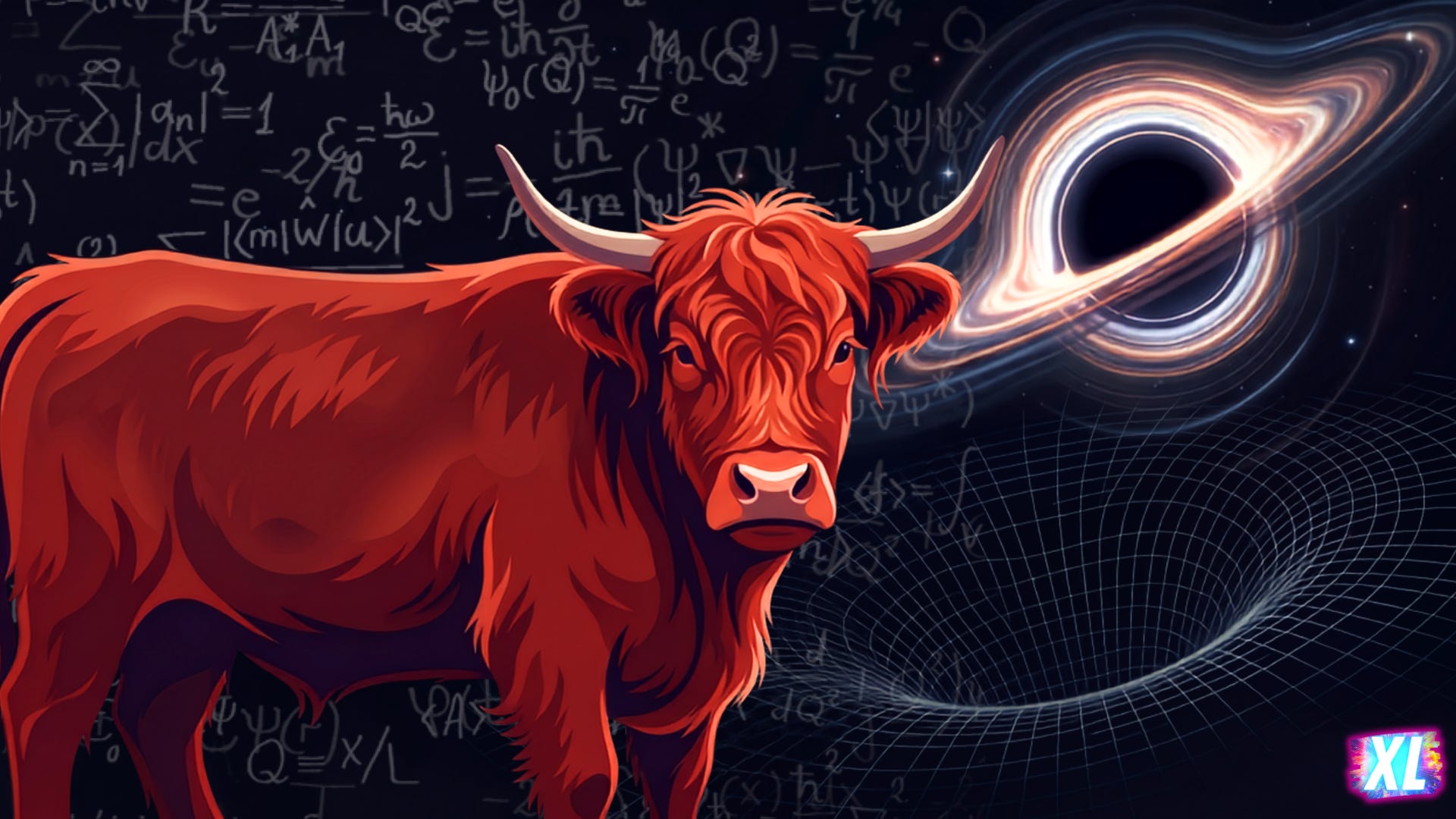
When I was in college, I majored in physics and philosophy.
I wasn’t particularly good at physics, but I really enjoyed being able to mathematically predict where billiard balls would go, what particles would emerge from a high-speed collision, and how much time slows down on a rocket flight — I stuck it out.
People often tell me that philosophy and physics “seem so different,” but actually, science is just the most successful branch of Western philosophy.1
Science knows many orders more about the world today than it did even a century ago, and unfathomably more than it did millennia ago. In contrast, Western philosophy knows far less than it thought it knew when it began, guns blazing, confident that it could discover the fundamental truths of the universe using “pure reason” alone.
What philosophers discovered instead is how limited reason is for knowing anything about objective reality.2 Through reason, we can know for certain only what we could observe and measure, but not how we should live our lives. This is the intellectual backdrop to the fairly common notion Westerners hold today that ideas are divided between scientific truth and religious fictions.3
It’s fairly widespread to hold a similar dichotomy within Judaism itself. Some parts of Judaism are considered “rational,” while others are labeled “irrational/mystical/unknowable.” The epitome of unknowability is the namesake of this week’s parasha, the chok-חוק, a legal decree that has no apparent explanation.
Bamidbar 19:2:
זֹאת חֻקַּת הַתּוֹרָה אֲשֶׁר־צִוָּה ה׳ לֵאמֹר דַּבֵּר אֶל־בְּנֵי יִשְׂרָאֵל וְיִקְחוּ אֵלֶיךָ פָרָה אֲדֻמָּה תְּמִימָה אֲשֶׁר אֵין־בָּהּ מוּם אֲשֶׁר לֹא־עָלָה עָלֶיהָ עֹל
This is the [quintessential] chok-decree of the Torah, which Hashem has commanded you to say to the people. Speak to the Israelites and have them take for you [Moshe], a totally red-haired, unblemished cow, upon which no yoke was ever laid…
The text continues to enumerate the mystifying details of the purifying process that uses the ashes of an incinerated red cow diluted in water.
The 613 mitzvot are often categorized as mishpatim, eidot and chukim, as the “wise son” asks at the Seder table:
Devarim 6:20:
?מָה הָעֵדֹת וְהַחֻקִּים וְהַמִּשְׁפָּטִים אֲשֶׁר צִוָּה ה׳ אֱלֹקינוּ אֶתְכֶם…
What are the testimonies (eidot), rules (mishpatim) and decrees (chukim) that Hashem our God commanded you?
Typically,
mishpatim refer to laws that are entirely rational (e.g. don’t steal or murder),
chukim, as we mentioned above, entirely irrational (e.g. don’t mix milk and meat), and
eidot give testimony through their practice of a historical event or some idea that should be commemorated (e.g. Passover and Shabbat).
The standard understanding is that these three buckets are completely independent silos.

It turns out that this strict division between rational and irrational is not an accurate depiction of Jewish law — or science, for that matter.4
King Solomon was known to be “wiser than any person,” and yet regarding the parah adumah (the red cow) he writes:
Kohelet 7:23:
אָמַרְתִּי אֶחְכָּמָה וְהִיא רְחוֹקָה מִמֶּנִּי…
…I said [to myself] I will become wise, but it is distant from me.
Bamidbar Rabbah 19:3:
Solomon said: Regarding all these [areas of wisdom] I was able to comprehend, but the portion of the red heifer I probed, asked, and deliberated; “I said: I will become wise, but it is distant from me.”
The parah adumah, the red cow is not described as irrational, but rather “rekhoka” — far from him.
Given that the red cow is the quintessential chok, we can infer that all other mitzvot exist on a continuum in which some are “closer” to our lived experience and therefore more immediately comprehensible, and some less intuitively comprehensible, and therefore intellectually “farther.”
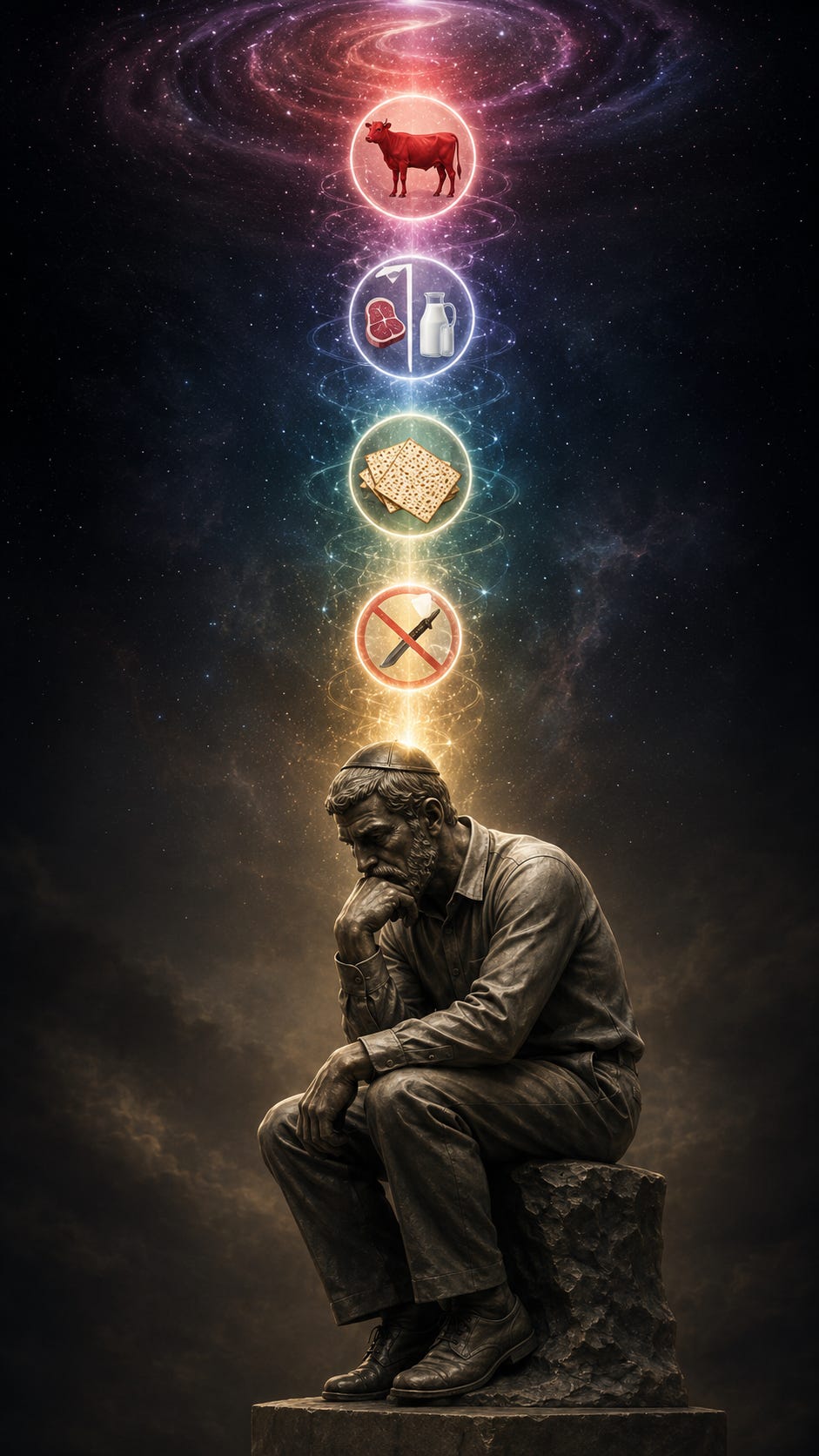
Mishpatim are certainly easier to grasp than chukim. Anyone can easily understand that a society that essentially looks the other way when theft occurs — unravels (think: San Francisco and Los Angeles).5
One click further from our intuitions: the prohibited activities on Shabbat are not the activities one would think to refrain from to have a “day of rest,” but once one keeps Shabbat for a few weeks in a row, he starts to understand their wisdom, and why merely “not going to office” is not enough.
Finally, furthest from our intuitions, not wearing garments woven with wool and linen (shatnez) or refraining from cooking/eating milk and meat together sound completely foreign, and one would struggle to come up with a rational explanation. In his radical essay on vegetarianism, Rabbi Abraham Yitzchak Kook speculates how they will become self-evident in the future, when we better understand the differences and similarities between humans and animals.6 It’s not that they are illogical laws, but rather that they are counterintuitive because they have a deeper logic.7
Ironically, modern science reveals that the natural world works the same way. The logic of the universe isn’t flat. At high gravity, high speeds, and small scales, the logic warps. My college professor of Modern Physics warned us not to “try to picture anything” — because the pictures in our minds are built from experience at human scales, and human scales are just one thin layer of reality. As physics pushed into these new domains, a deeper logic emerged beneath the familiar one.
Those who haven’t studied science will say quantum mechanics and relativity are “really deep” — and they’re right, but they don’t know the half of it. Those who have studied them know just how far the rabbit hole actually goes.
Both the universe and the Torah were created with God’s infinite wisdom. One might expect them to be incomprehensible — products of a depth so far beyond us that our minds couldn’t gain purchase. But the opposite turns out to be true. Everything has a logic. The surface is genuinely accessible to human reason, and that’s not a compromise or a simplification — it’s a gift. But the rabbit hole of God’s wisdom has no bottom. The deeper we go, the more clearly we can see how much deeper it gets.
I’m sorry I haven’t written in a while. Stay tuned, for my new venture, Meaning Within. I’ll explain how it will work in the coming weeks.

They both started trying to ascertain the truths about the world. Science just learned how to produce lasting results.
The term “science” wasn’t used until the 19th century. Prior to that, science was called “natural philosophy.”
“Epistemology” is a useful philosophical word here. “Episteme” means “knowledge” and “-ology” means “study of.” Epistemology is the study of what we can know, and how we know what we know.
Here’s a quick summary of Western epistemology:
Aristotle: Reason can know reality.
Descartes: If you doubt absolutely everything, you can know with certainty that you exist, and build from there.
Hume: The reasons for things are imaginary.
Kant: It’s impossible to know reality independent of the filter you see it through.
Postmodernists: Reason is merely language, culture, power, and trauma wearing a lab coat.
TikTok: Reality is whatever “hits,” and elicits the word “facts” or fax emoji 📠.
Elsewhere, I discuss the issue of “scientism.”
Christian theology, on the other hand, does possess such a dichotomy. When I spent a semester in the University of Edinburgh, I took a course in their divinity school called “Systematic Theology,” which had a counterpart I did not take called “Dogmatic Theology.” Systematic theology was dedicated to that which we can know through reason, and dogmatic theology was dedicated to Christian notions that had to be accepted on faith alone. Dogma is illogical by definition and thereby an expression of faith. As we’ll see, Judaism is better understood as a continuum of how readily its ideas can be understood.
But the details of mishpatim contain elements that are certainly not intuitive. For example, one who steals in secret pays double the value of what he stole.
The Rambam (Maimonides) in Section III of the Guide for the Perplexed writes explicitly that all mitzvot are beneficial to those who practice them and for the world at large, and all have reasons that are comprehensible:
Guide III:26:
There are commandments which are called ḥuḳḳim, “ordinances,” like the prohibition of wearing garments of wool and linen (shatnez), boiling meat and milk together, and the sending of the goat [into the wilderness on the Day of Atonement]. Our Sages use in reference to them phrases like the following: “These are things which I have fully ordained for thee: and you dare not criticize them”; “Your evil inclination is turned against them”; and “non-Jews find them strange.” But our Sages generally do not think that such precepts have no cause whatever, and serve no purpose; for this would lead us to assume that God’s actions are purposeless. On the contrary, they hold that even these ordinances have a cause, and are certainly intended for some use, regardless to it being unknown to us; owing either to the deficiency of our knowledge or the weakness of our intellect. Consequently there is a cause for every commandment: every positive or negative precept serves a useful object; in some cases the usefulness is evident, e.g., the prohibition of murder and theft; in others the usefulness is not so evident, e.g., the prohibition of enjoying the fruit of a tree in the first three years (Lev. 19:73), or of a vineyard in which other seeds have been growing (Deut. 22:9). Those commandments, whose object is generally evident, are called “judgments” (mishpatim); those whose object is not generally clear are called “ordinances” (ḥuḳḳim).
In chapter 31, the Rambam points us to these explicit verses in Deuteronomy that actually identify the chukim as eventually demonstrating to the nations of the world the wisdom possessed by the Jewish nation:
Devarim 4:6-8:
וּשְׁמַרְתֶּם וַעֲשִׂיתֶם כִּי הִוא חׇכְמַתְכֶם וּבִינַתְכֶם לְעֵינֵי הָעַמִּים אֲשֶׁר יִשְׁמְעוּן אֵת כׇּל־הַחֻקִּים הָאֵלֶּה וְאָמְרוּ רַק עַם־חָכָם וְנָבוֹן הַגּוֹי הַגָּדוֹל הַזֶּה…וּמִי גּוֹי גָּדוֹל אֲשֶׁר־לוֹ חֻקִּים וּמִשְׁפָּטִים צַדִּיקִם כְּכֹל הַתּוֹרָה הַזֹּאת אֲשֶׁר אָנֹכִי נֹתֵן לִפְנֵיכֶם הַיּוֹם׃
You must safeguard [these mitzvot] and perform them, for that is what will attest to your wisdom and your understanding in the eyes of other peoples, who will hear all these chukim and say, “Only this great nation is such a wise and understanding people.”
…And what great nation is there that has chukim and mishpatim as plainly just as this entire Torah, which I am setting before you today?
Muy bueno Jackie! Está tan bueno que hay partes que hay que leer de vuelta, y sin leer las notas (refs), no se puede entender. It’s deep! Thank you!
what if the red cow’s signature isn’t distance — it’s contradiction? The same ash purifies the impure and defiles the pure, at once. That isn’t one value far down Solomon’s line; it’s two opposite values at a single point, and a spectrum has no coordinate for it. So rekhoka doesn’t measure how far the thing sits from us — it names the mind’s inability to integrate its paradox.