


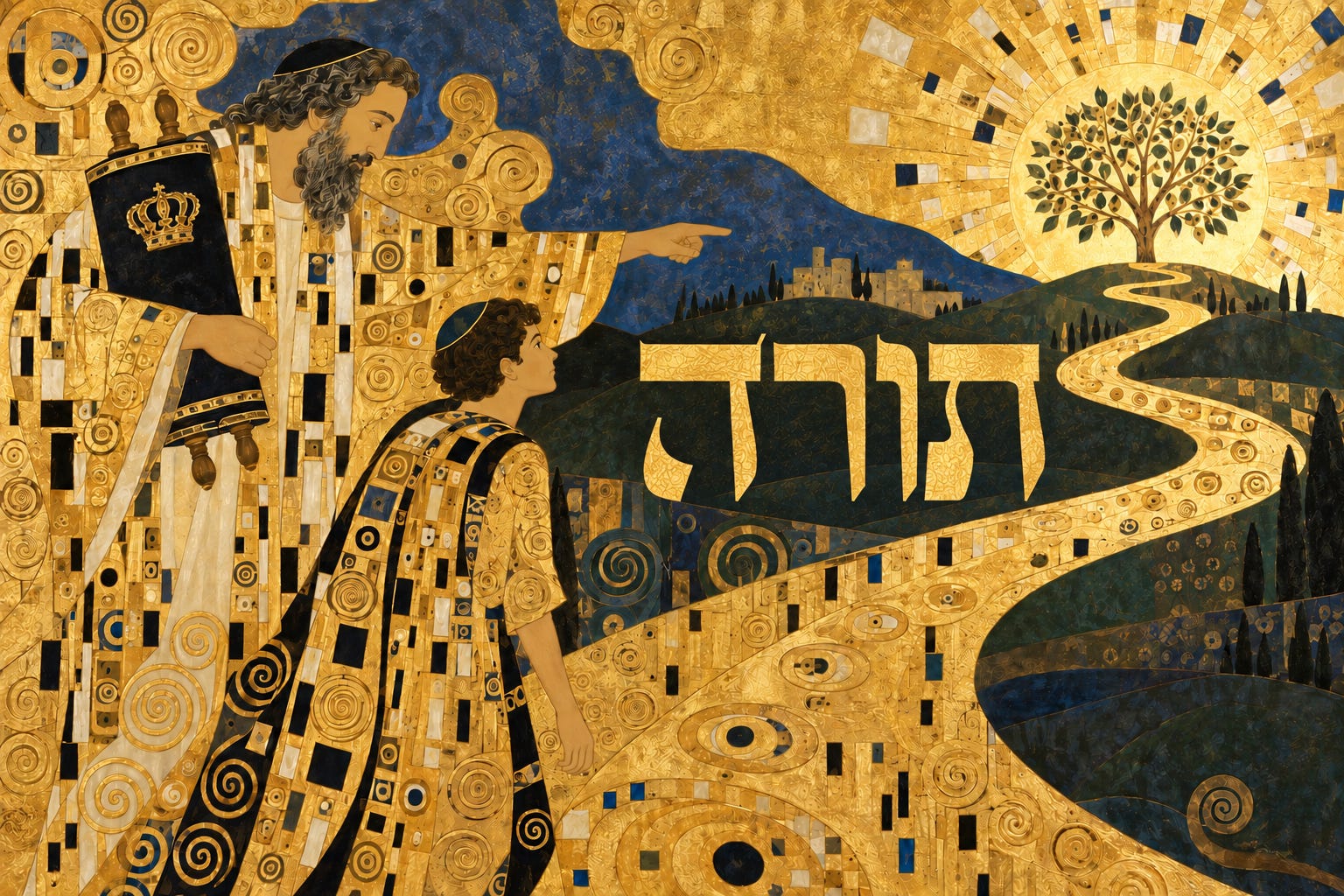
Every religion in the world has its practices and a belief system through which those practices are understood to be meaningful. One of the primary avenues for encountering those beliefs is the sacred books of each spiritual tradition.
I don’t pretend to be an expert in anyone else’s religion. It’s hard enough to keep up with my own. But I do believe that the name people give to their sacred books tells us something important about how they understand the meaning and purpose of study.
The name of something is, in a sense, its brand: a word, phrase or image that succinctly tells us what it’s all about.
Christianity’s book is composed of “Gospels,” a word that comes from the Olde English of gōd-spell, a direct translation of the Greek euangelion (like the Modern English “evangelical”), which means “good news.” Christianity sees the study of the Bible (which, incidentally, just means “the books,” like “bibliography) as bringing good tidings for a future redeemed by God.1
The Qur’an of Islam, by contrast, is called al-Qurʾān, “the Recitation” (similar to the Hebrew word for reading and proclaiming aloud, “kriah-קריאה”). The reading and reciting of the words of the Koran are most prominent in the way it is presented to its followers.2
Hinduism has many sacred texts, but the most ancient and authoritative are the Vedas. In Sanskrit, the word veda means “[Sacred] Knowledge.” The Vedas themselves belong to a category called Śruti, which means “that which is heard/perceived” by seers. The other catergory of sacred texts is Smṛti, which means “that which is remembered,” of which the well-known Bhagavad Gītā is a part, which itself means “the Song of the Lord.”
Buddhism doesn’t have a single primary authoritative text, but rather a vast collection of scriptures compiled over millennia. They all revolve around what is called Dharma, which refers to the body of principles that “hold” or “support” the universe (derived from the Sanskrit root dhṛ, meaning "to hold").
Now we are ready to appreciate what makes the Torah unique. While it incorporates elements central to these other sacred texts, the term “Torah” highlights a completely different dimension of study.
The Torah certainly contains good tidings for the future. The bottom-line message of all the prophets was to herald a better world. Our tradition is that Eliyahu HaNavi (Elijah the Prophet) will be the one who mevaser lanu besorot tovot, yeshuot venechamot — heralds for us good tidings, salvations, and consolations. Indeed, all the prophets had the habit of finishing their prophecies with optimistic messages to contextualize the severity of their warnings about what would happen if we didn’t get our act together. All this is true, but spreading the gospel of the future redemption is not the main thrust of Torah.
The Torah is often called in the Talmud mikra–מקרא, from the same Semitic root as Qur’an. And there is, in Jewish consciousness, as in Islam, a notion that the very act of reciting words Torah has an impact on the soul, even before one understands what he is reading. This said, recitation is only the beginning — the prerequisite for the deeper understanding and action that is sought.3
No doubt, the Torah wants us to attain knowledge. Da’at Torah, an integrated knowledge of Torah, is, in many ways, the ultimate goal of Torah study. But “knowledge” (דעת) is not the word chosen to brand Torah.
Torah uses the word “listen” as one of its calling cards, and certainly instructs us to “remember and not forget.” It is also called a “song” in one of Moshe’s final speeches before he passes away. But these too did not become the Torah’s chosen brand.
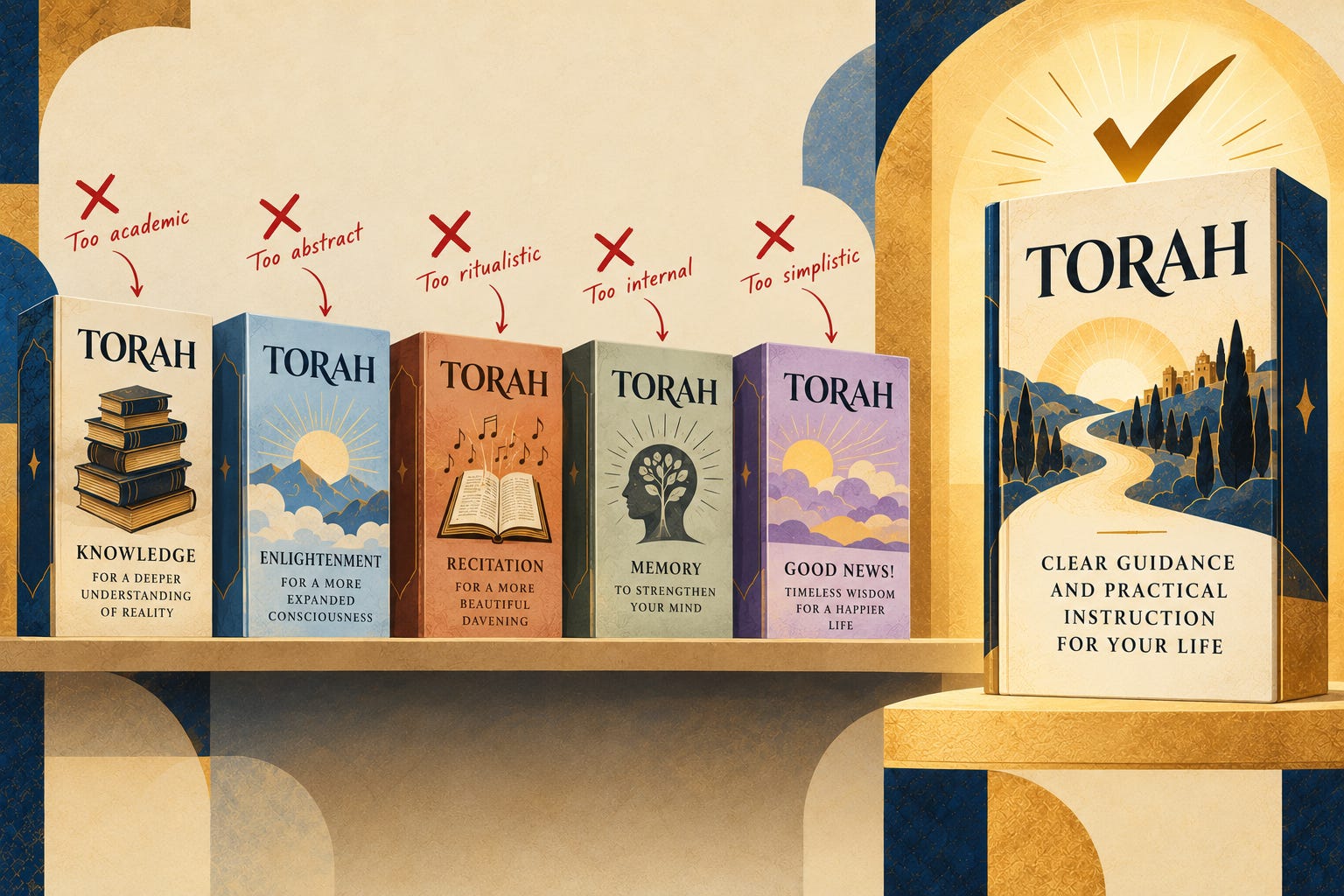
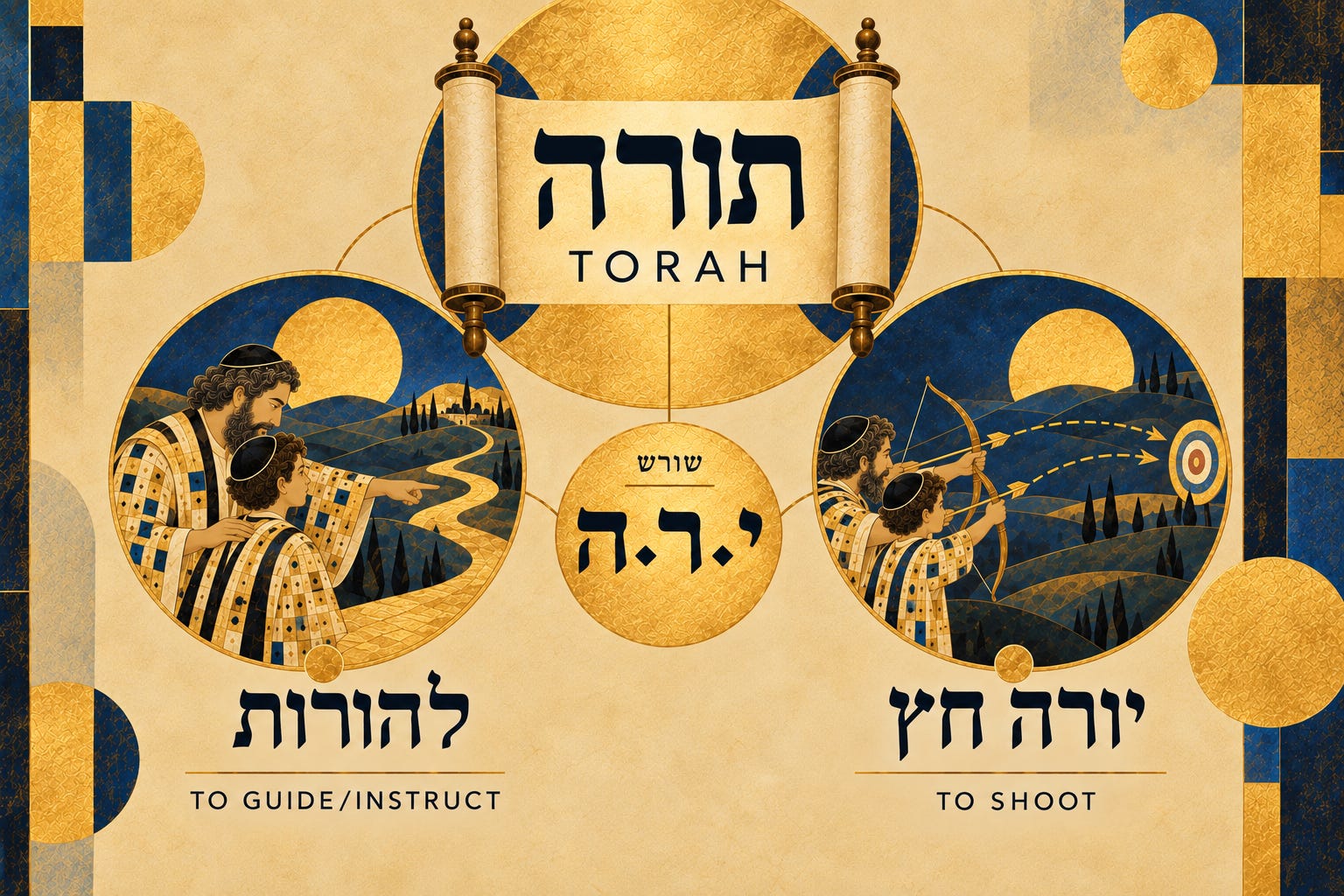
The name chosen for God’s teachings was “Torah” (תורה).
It comes from the Hebrew root י-ר-ה, which means to give guidance and practical instruction, as in the word lehorot (להורות), according to the Book of Roots of Rabbi David Kimchi, known as the “Radak” (1160-1235).
Understanding that the essence of Torah is instruction and practical guidance is helpful in a number of ways.
People often ask about the Torah: Why does it describe creation in seven days? Why doesn’t it give more scientific detail? Why no dinosaurs? Why doesn’t it give more historical context?
A good answer is that the Torah never presents itself as a comprehensive book of knowledge or history. Its goal is to guide us in “those matters that would be understood as having an ethical aspect, that touch on straightening the ways of man, in his outward behavior and his inner emotions.”4
This changes how we should learn it. When we study an academic subject, the goal is to know, and quizzes and tests measure how much we’ve learned. The goal of Torah, however, is not information for its own sake but transformation: bringing ourselves, our lives and our environment into closer alignment with what the Torah asks of us.

The word Torah comes from the root י-ר-ה, which has a second meaning that is surprising at first and profound on reflection. As a verb, it doesn't only mean to instruct. It also means to shoot an arrow, or some other projectile, as in yoreh chetz (יורה חץ).
A friend of mine told me about a rabbi he had in yeshiva who, when teaching something especially important, would raise his voice to an absurd volume. The students would stare up at him, wide-eyed and more than a little scared, and he would ask, still at full volume, “Do you know why I’m yelling this lesson?!”
The students had no idea.
“Because I’m not just teaching you!” he’d say. “I’m trying to teach with enough force that the message reaches your children, your grandchildren, and your great-grandchildren, hopefully until the end of time!”
Instruction that truly matters isn’t a passing prompt. It’s guidance for all of life, not tied to a particular moment in history or a generational fad.
That is what it means for Torah to be an arrow. The teacher, whether a professional educator, a parent, or anyone sharing guidance with people they care about, has to aim carefully and fire with enough force to reach a target far in the distance, farther than the teacher could ever go.
The greatest teacher of Torah of all time was Moshe. Even though in many ways he functioned as a king, he never took that title, nor did he seem to want it. Instead, he became known for all time simply as Moshe Rabbeinu — Moshe, our teacher.
The Torah itself is called Torat Moshe, the Torah, the instruction, of Moshe.
Our tradition teaches that as soon as a child begins to speak, one of the first verses we should teach them is:
Devarim 33:4:
תּוֹרָה צִוָּה־לָנוּ מֹשֶׁה מוֹרָשָׁה קְהִלַּת יַעֲקֹב׃
Torah tzivah lanu Moshe, morashah kehilat Yaakov.
The Torah was commanded to us by Moshe, an inheritance of the congregation of Jacob.
The Talmud points out that this idea is actually alluded to in the numerical value of the word Torah itself. תורה equals 611, just two shy of that famous number of mitzvot, 613. Why? The first two of the Ten Commandments are spoken in the first person, directly to us:
“I am Hashem your God, Who took you out of Egypt, from the house of slavery.”
“You shall have no other gods before Me…”
Starting with the third, God is referred to in the third person:
“Do not take the name of Hashem your God in vain, for Hashem will not hold guiltless one who takes His name in vain.”
“Remember the Shabbat to sanctify it… because in six days Hashem made the heavens and the earth… and He rested on the seventh day…”
The Talmud explains that the first two were heard directly from God. Mystical sources understand them as embedded in the Jewish consciousness since the national prophetic experience at Sinai. The first is that God has a personal relationship with us through history: the God who took our ancestors out of Egypt is Hashem Elokecha, your God, and that relationship didn’t end with them but continues with us. The second is that giving ultimate power to any other deity or entity violates that relationship.
Everything else came to us through Moshe, a human being, flesh and blood. Through the choices he made in his life, Moshe became an ish Elokim, a man of God, and he has remained one in our consciousness ever since. But he was still an ish, a man. And that man had an enormous impact by dedicating his life to instruction that was accessible and practical, giving each person what they needed.
The essence of instruction is clarity and immediacy for the listener. If someone has never kept Shabbat, I can teach them all its laws. That has real value, because it sets up the target and shows them what it looks like. But that alone isn’t instruction, because the person will inevitably feel incapable of reaching it.
Good instruction, good Torah, helps a person see how to begin moving down the path. It also doesn’t sell them short by implying that a few steps will be enough. It shows them where they are, where they’re capable of going, and how to start getting from one to the other.
Good instruction is like firing an arrow. You have to aim properly. You have to be calm and steady. And you have to put enough tension in the bow for the arrow to reach its target.
As it says in Tehillim:
Tehillim 127:4:
כְּחִצִּים בְּיַד־גִּבּוֹר כֵּן בְּנֵי הַנְּעוּרִים׃
Like arrows in the hand of a warrior are sons born to a man in his youth.
Rashi’s Commentary ibid:
כֵּן בְּנֵי הַנְּעוּרִים. הַתַּלְמִידִים שֶׁאָדָם מַעֲמִיד מִנְּעוּרָיו:
“So are the sons of one’s youth” [means to say,] the disciples that a man sets up in his youth.
We guide our children. We try to aim as best we can. But we also let go and let them fly on their own, trusting our best efforts to hit the target.
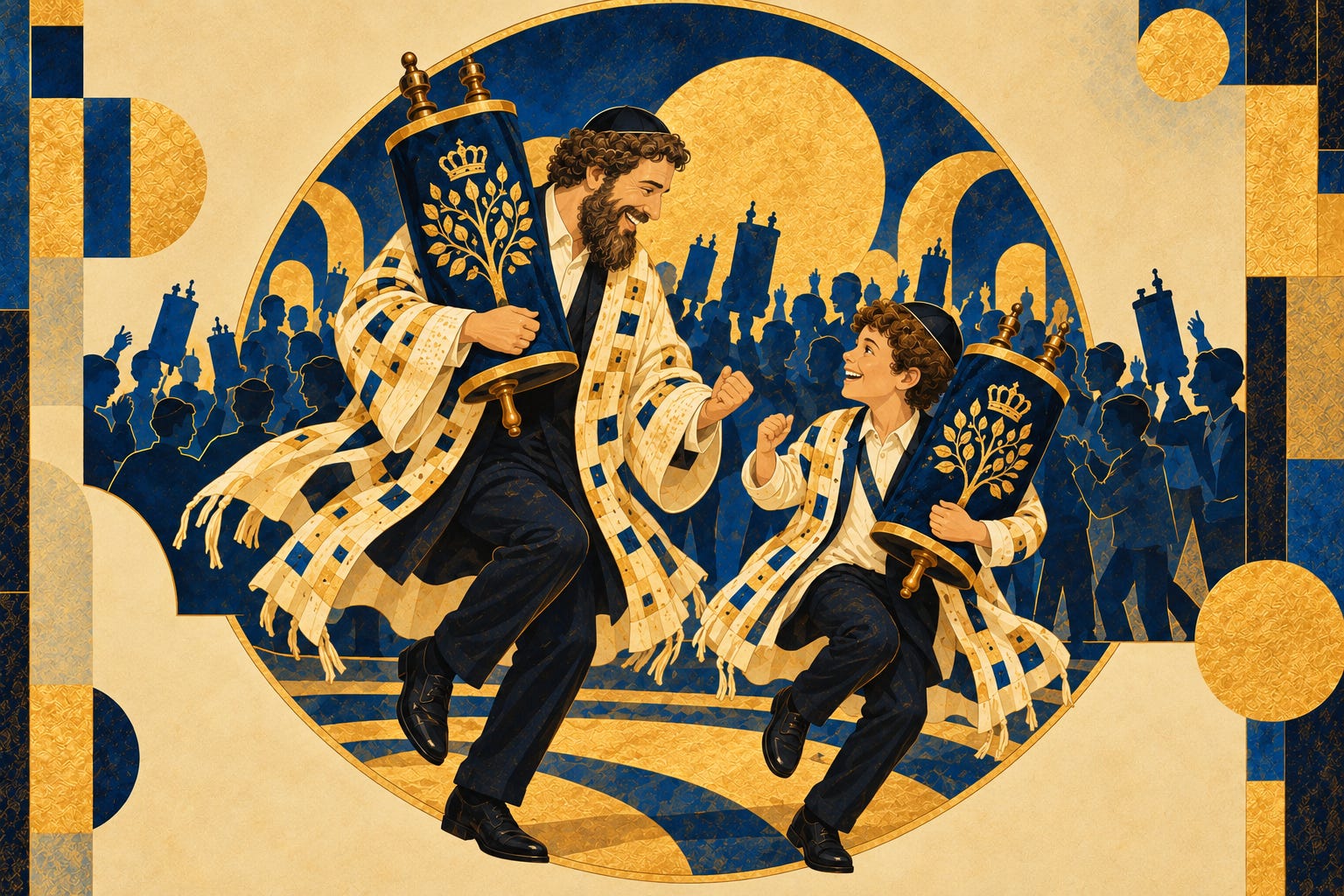
This is what we’re dancing about on Simchat Torah. If we’re dancing with the Torah, and dancing in a circle together, we’re on target, and will keep going.
Chag Sameach,

Jack Cohen
“Euangelion” was a Greek word before Christianity, regularly used for announcements of military victories and imperial events. The Priene Calendar Inscription (9 BCE) uses euangelia in connection with the birth of Emperor Augustus. So when early Christians announced an euangelion about the “messiah” and the “Kingdom of God,” their audience would have understood the word as a major public announcement of something world-changing.
The book itself could have been called al-Kitāb, “the Book” (like the Hebrew ketav-כתב) as it refers to itself sometimes in the Qur’an. However, it is the oral recitation of the book that is primary, hence the name it is known by, Qur’an. Interestingly, Mohammed attests that he was illiterate and was only able to write the book by way of miracle. In Qur’an 96:1 and 8:2 you see the emphasis on recitation, emphasized in Hadiths such as this one.
See Derech Hashem of the Ramchal, and the Chovot Halevavot, Shaar Avodat Elokim who compares one who is satisfied with mere enunciating of words to a donkey who is merely carrying books.
Rabbi Abraham Isaac HaKohen Kook in For the Perplexed of the Generation.